The Growth Project
OpenClaw Ships Faster Than You Can Read the Diff
Video by AI Engineer on YouTube. The summary below is ours, in plain English; we're not connected to the channel.
An OpenClaw maintainer explains how a small part-time team ships code at enormous speed with many AI agents at once.
In plain English
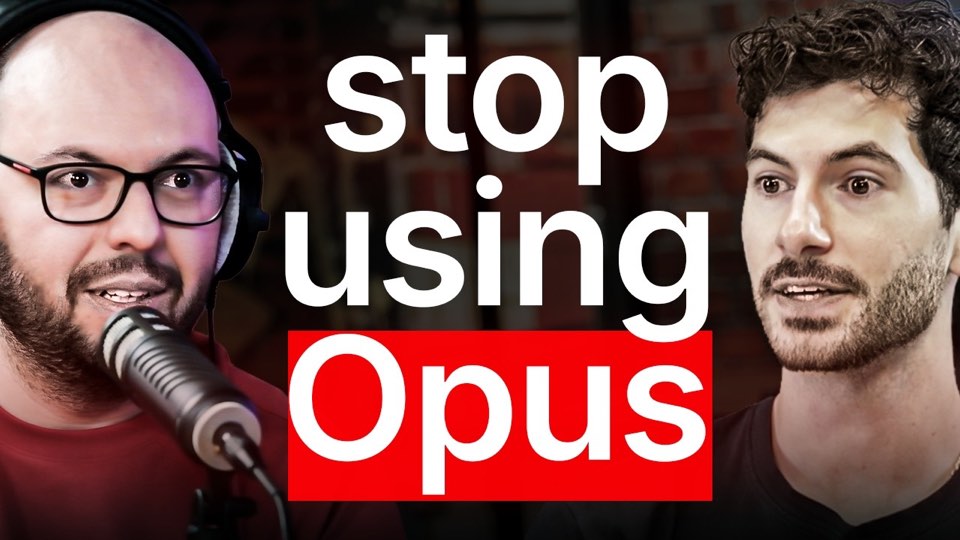
Vincent is one of the core maintainers of OpenClaw, an open-source AI project. He calls his way of working a “dark factory”: many AI agents writing code at once while he oversees them.
At its peak, 10 to 15 maintainers, all with day jobs, pushed about 800 commits (saved changes to the code) a day, and on one day he alone reached close to 3,000.
His point is that this is not luck: there is real engineering behind it, and the bottleneck has moved from typing code to taste, meaning judgment about what should and should not be built.
Three ideas worth keeping
- Split the work into separate lanes, such as tests, features and urgent bugs, and give quiet lanes less supervision than tricky ones.
- Watch how an agent explains itself: when it starts waffling, stop the session, just as you would question a staff member.
- When agents make changes cheap, the hard part is saying no, or the product fills up with features nobody needs.
What it means for your business
Vincent says managing agents is a lot like managing people, and his experience leading large teams mattered more than any technical trick. If agents make building cheap, the scarce thing becomes deciding what is worth building.
What it means for software teams
Plan for the machine load of many agents running tests at once: his habit of a separate working copy per change left him with 70 to 80 a day and nearly overwhelmed his computer. He keeps reusable skills (written procedures agents follow) and has agents read their own past sessions to improve them.
One overnight rewrite touched 82% of the core code, and the team got it working again largely because a big set of tests told them when they were close.
What we found, and what we did
We work at a smaller scale than OpenClaw: about 45 changes merged a day over the last month.
We also lean far less on feel. Every change, whoever wrote it, goes through the same automated checks, and we judge the result by whether a senior engineer would merge it. More in Stop Measuring AI by Test-Pass Rate.
A typical change is about 740 lines of code, many times the size of a typical pull request, and together they add up to over 1.5 million lines a month, directed by one operator.
We hit his machine-load problem too: with many agents, our desktop app and the checks sharing one machine, a 5-minute check run took 53 minutes.
Attention also runs out: in one bad week, silent stalls of 8, 11 and 5 hours each took about five minutes to fix once a person noticed. Our lesson, written up in We Were the Bottleneck, is to measure the pipeline before building more of it.
Worth watching
- 04:22: the numbers, from 800 commits a day across the project to nearly 3,000 in a day from one person.
- 09:18: how he splits his agents into lanes, like a manager over a production line.
- 12:22: knowing an agent has gone wrong from how it explains itself.