The Growth Project
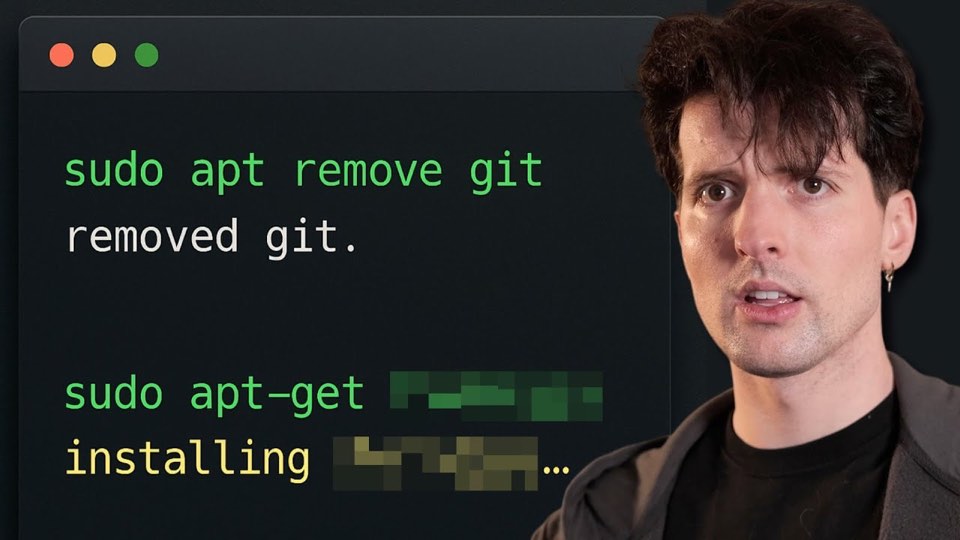
Anthropic Rebuilt Git (yes really)
Video by Theo - t3.gg on YouTube. The summary below is ours, in plain English; we're not connected to the channel.
Theo reads Anthropic's account of replacing Git with its own system, and explains why AI-scale coding strains tools built for people.
In plain English
Git is the standard tool software teams use to track changes to their code. Theo reads an article from Anthropic, the company behind Claude, saying its AI now helps produce so much code that Git and the surrounding tools became the bottleneck.
The article says the company went from about 2,500 code changes merged a day in May to over 30,000 a day by September. So it built its own replacement for Git, called Scion, and moved over in about five months.
Theo adds his own commentary along the way. He argues that fast teams should focus on making bad changes easy to undo, rather than adding more checks before code goes in. He also notes that Anthropic itself says this is not a replacement for Git in general.
Three ideas worth keeping
- Git assumes every user keeps a full copy and may work offline, but AI agents are always online, so a central server holding the history suits them better.
- Anthropic reports big speed gains from the change, such as checking out code and checking its status many times faster than Git.
- Anthropic says engineers still matter: a big part of their job was telling the AI “no” when it over-built or broke core rules.
What it means for your business
You do not need to copy Anthropic. The useful point is that AI can make the old limits of your tools show up sooner than you expect. If your team is starting to ship far more changes than before, ask where the queue is forming.
Also ask how quickly you could reverse a bad change, because that matters as much as stopping one.
What it means for software teams
Review steps, merge queues and test runs were designed for people working at human speed. Theo and Anthropic both say these may need rethinking once AI produces changes by the hundreds. Anthropic stresses its approach suits only huge codebases, and suggests smaller teams take ideas from it rather than the whole system.
What we found, and what we did
Inside our own platform, Mibble, we built our own system for landing code. One queue is the only thing allowed to update the main code, and it lands approved changes one at a time, in order, now about 45 changes a day.
We also added stacked changes, so an agent can build on a change that hasn’t landed yet. The hard part has been keeping up: over three days, about 60% of our automated test runs went on re-testing changes after newer code landed ahead of them, as we wrote in Is Jujutsu a Git Superpower for AI Coding?.
Why GitHub Wasn’t Built for AI Agents covers the review bottlenecks, and our scale is still far smaller than Anthropic’s.
Worth watching
- 01:40: the headline numbers on code changes per day, and why Anthropic says source control became the bottleneck.
- 11:17: why Git’s design does not fit huge codebases used by always-online agents.
- 37:09: the speed comparison between Anthropic’s system and Git.
- 44:20: Anthropic’s own caveat that this is not a general Git replacement.